
Description
What Is a Paper Canister?
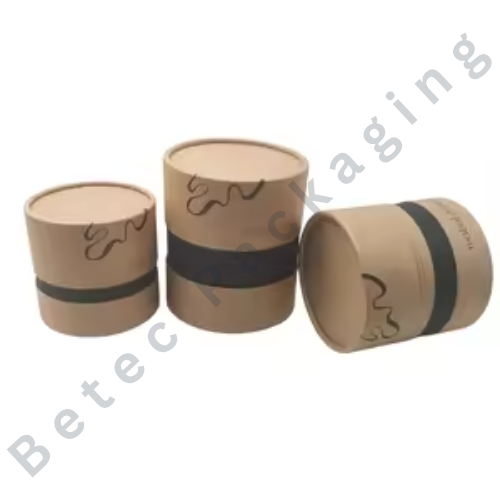
A cardboard canister, often called a composite can or paper can, is a round container built from layers of paperboard, usually with an inner liner and a fitted bottom and lid. It looks like a tin but is lighter and printable on the wrap. Betec Packaging builds cardboard canister packaging for dry foods, powders, and gifts.
The Layers That Make It Work
The body is a spiral-wound paperboard tube that gives structure. An inner liner, often aluminum-lined paper or a food-suitable film, adds a barrier to moisture, grease, and aroma. The outer label or wrap carries branding. Ends are typically paper or metal.
Food Contact and Barrier
For food and supplement products, a liner suited to contact with your product is important, and requirements should be confirmed for your product and market. Barrier performance depends on the liner and closure, so Betec Packaging helps match them to your shelf-life needs.
Closures
Plastic overcaps reseal for repeated use. Paper caps suit lighter dry goods. Metal ends and easy-open membranes suit longer shelf life. Choose by how the product is used.
Sizes and Capacity
Canisters come in many diameters and heights, from small sample cans to larger tubs for powders or snacks.
Sustainability, Honestly
Paper canisters often combine paper, foil, plastic, and metal, so they are mixed-material packages and may not fit simple curbside recycling. Betec Packaging can discuss mono-material or more recyclable constructions if that is a priority.
Uses
Coffee, tea, cocoa, powders, snacks, supplements, candies, and gift sets all suit canisters.
Printing
CMYK and PMS printing with matte or gloss finishes give canisters shelf presence.
Why Choose Betec Packaging
Betec Packaging offers free design support and digital proofs.
Request a free quote and let Betec Packaging build canisters that look premium and keep contents fresh.

Reviews
There are no reviews yet.