
Description
Give Your Pencils the Packaging They Deserve
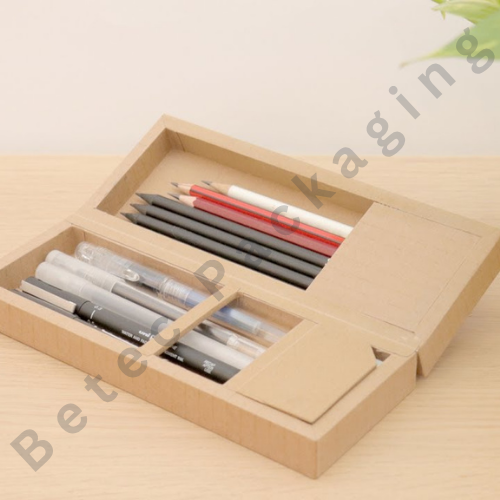
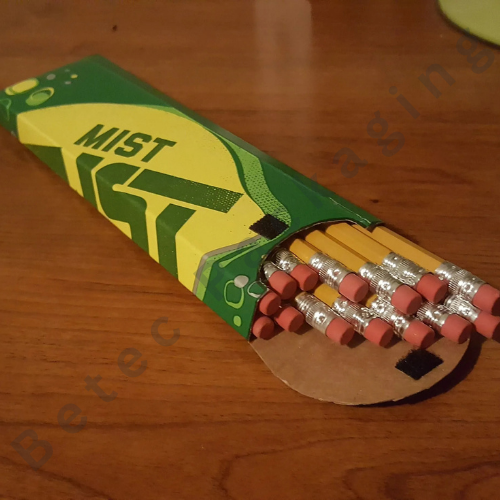
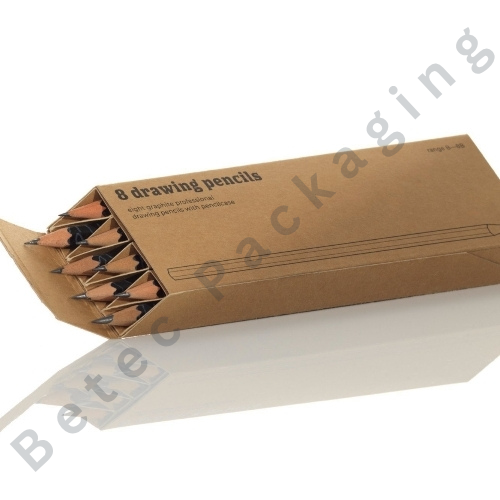
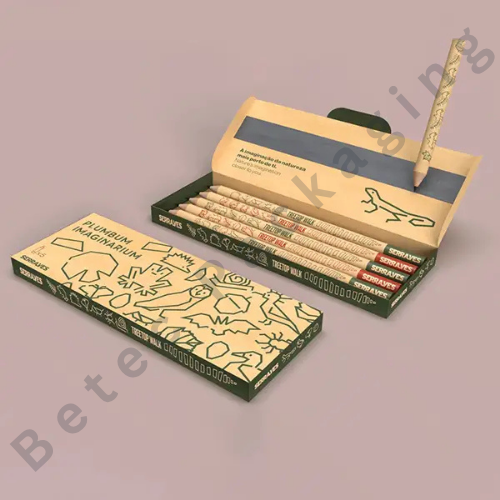
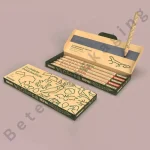
A pencil looks simple, but it’s not indestructible. The graphite core can snap from a single hard knock, and loose pencils tend to get scratched, dented, or lost somewhere between the warehouse and the shelf. Cardboard pencil boxes solve that problem while doing a second job at the same time: giving your product a printed, branded presence the moment it’s picked up. Each pencil sits securely inside, the printed finish stays protected, and a plain writing tool turns into something that actually looks worth buying. For stationery brands, school suppliers, gift retailers, and promotional companies, that difference is often what decides whether a product gets picked off the shelf or passed over.
Why Cardboard Is the Right Material
Cardboard has stayed the standard material for this kind of packaging for practical reasons. It’s light enough to keep shipping costs down, rigid enough to hold its shape under pressure, and it takes print cleanly, so logos, colors, and fine text all come through sharp. For orders that need to survive rougher handling, corrugated cardboard (the kind with a fluted inner layer) adds extra cushioning without making the box bulky. Kraft stock is a common choice too, especially for brands leaning into a natural, eco-friendly look. All three options are recyclable and biodegradable, which matters more every year in the school and stationery space, where parents, teachers, and retailers are actively steering away from plastic packaging.
Popular Box Styles
Style is where a pencil box starts to say something about the brand behind it.
Tuck-End Boxes
The most common style. Simple to assemble and inexpensive at scale, a practical fit for supermarkets and school supply chains ordering in volume.
Sliding Drawer Boxes
An outer sleeve with an inner tray that slides free. That small pause in opening tends to make the unboxing feel more premium, which is why gift sets and limited collections often use this style.
Window Boxes
A die-cut or acetate opening in the front panel lets buyers see the actual pencils before purchasing, building a level of trust that a fully printed box can’t offer on its own.
Two-Piece Boxes
A separate lid and base that feels sturdier and more upscale, a common choice for gift-oriented sets where presentation carries as much weight as protection.
Printing and Finishing Options
Printing is where the box actually becomes part of the brand. CMYK printing handles full-color artwork well, gradients, illustrations, and detailed graphics all translate cleanly. When exact color consistency matters more than range, PMS (Pantone) matching keeps a brand’s specific shade identical across every print run, which matters for companies reordering the same packaging repeatedly. Digital printing is the faster route, useful for shorter runs, test designs, or seasonal packaging that doesn’t need a full production commitment.
Finishing options like matte or soft-touch coating, spot UV, foil stamping, and embossing add a tactile, higher-end feel without changing the underlying structure of the box, small details that customers notice even if they can’t always explain why a box feels more expensive than it is.
Built to Protect During Storage and Shipping
None of the above matters if the box doesn’t hold up structurally. Board thickness, usually measured in pt or gsm, has the biggest impact on how well a box resists crushing during storage and transit. Pre-glued construction and tight die-cut tolerances keep pencils from shifting or rattling inside the box, and for larger shipments, an added corrugated layer gives extra shock absorption without adding much weight. A pencil that arrives with a snapped tip because the box couldn’t handle a bit of stacking pressure turns into a return, a complaint, or a lost repeat customer, so getting the structural side right the first time saves problems down the line.
Ordering in Bulk
Order volume is usually the deciding factor in how a brand approaches this packaging. A small trial batch to test a new design costs more per unit, which is normal and expected. Once volume increases, whether that’s for a full retail rollout, a school supply contract, or a subscription box program, the per-unit cost drops in a way that makes bulk production genuinely practical. That scalability is part of why cardboard pencil boxes work as well for a small stationery startup placing its first order as they do for an established distributor running repeat production month after month.
Reviews
There are no reviews yet.