Choosing the right packaging partner is an important decision for any business that wants to protect its products, build a recognisable brand and reduce its environmental impact. Whether you operate an online store, retail business, food company or manufacturing brand, finding dependable paper packaging boxes suppliers can help you achieve better packaging quality, consistent production and long-term cost savings.
Paper packaging has become an attractive option for businesses looking to replace unnecessary plastic packaging with recyclable and responsibly sourced materials. From custom kraft boxes and folding cartons to rigid paperboard boxes and corrugated shipping packaging, businesses have plenty of choices to match their products and branding requirements.
However, not every packaging supplier offers the same level of quality, customisation, material selection or customer support. Some may offer competitive prices but compromise on durability, while others may have attractive designs but struggle to meet delivery deadlines.
Finding a reliable supplier requires more than comparing prices. You need to evaluate material quality, manufacturing capabilities, printing options, environmental claims, minimum order quantities and customer service.
How to find reliable suppliers, what questions to ask before placing an order and how to choose custom, eco-friendly packaging that supports your business goals.
1. Understand Your Packaging Requirements First
Before contacting paper packaging boxes suppliers, take time to identify exactly what your business needs. Having clear requirements makes it easier to compare suppliers and avoid unnecessary expenses.
Start by considering the type of products you sell. Small retail items may require lightweight folding cartons, while heavier products might need stronger corrugated packaging. Luxury products may benefit from rigid paperboard boxes with premium finishes.
Think about the following requirements:
- Box dimensions: Determine the exact length, width and height needed for your products.
- Product weight: Choose materials that can support the product without bending or breaking.
- Packaging style: Decide whether you need folding cartons, mailer boxes, rigid boxes or custom-shaped packaging.
- Branding requirements: Consider your logo, brand colours, product information and printed artwork.
- Order quantity: Estimate how many boxes you need for your initial order and future production.
- Shipping conditions: Consider whether the packaging must withstand long-distance transportation.
You should also decide whether your packaging needs additional features, such as inserts, dividers, protective layers or special closures.
A clear packaging brief helps suppliers understand your expectations and provide more accurate quotations. It also reduces the chances of receiving boxes that do not fit your products.
2. Research Different Types of Paper Packaging Boxes Suppliers
The packaging industry includes manufacturers, wholesalers, distributors and specialised custom packaging companies. Understanding the differences helps you select a supplier that matches your business requirements.
Here are some common types of suppliers to consider.
Custom packaging manufacturers
These companies manufacture boxes according to your specific dimensions, designs, materials and printing requirements. They are suitable for businesses that want branded packaging rather than standard, ready-made boxes.
Wholesale packaging suppliers
Wholesale suppliers generally offer packaging products in larger quantities. They can be a practical choice for businesses that use standard box sizes and want to purchase packaging in bulk.
Eco-friendly packaging specialists
These suppliers focus on recyclable paperboard, kraft paper, recycled materials and other packaging solutions designed to reduce unnecessary waste. They may also provide information about responsible material sourcing.
Retail and shipping packaging suppliers
These companies provide mailer boxes, corrugated shipping cartons, folding cartons and protective packaging for online stores, retailers and distribution businesses.
When comparing different paper packaging boxes suppliers, check whether they manufacture products themselves or outsource production. Both arrangements can work, but you should understand who controls quality, production schedules and communication.
3. Check the Quality of Paper and Cardboard Materials
Material quality is one of the most important factors when choosing a packaging supplier. A beautifully designed box will not benefit your business if it tears easily, loses its shape or fails to protect the product.
Reliable suppliers should explain the materials they use and help you select an appropriate option.
Some common packaging materials include:
- Kraft paper: Popular for its natural brown appearance and use in retail, food and gift packaging.
- Recycled paperboard: Made using recovered paper fibres and suitable for many folding carton applications.
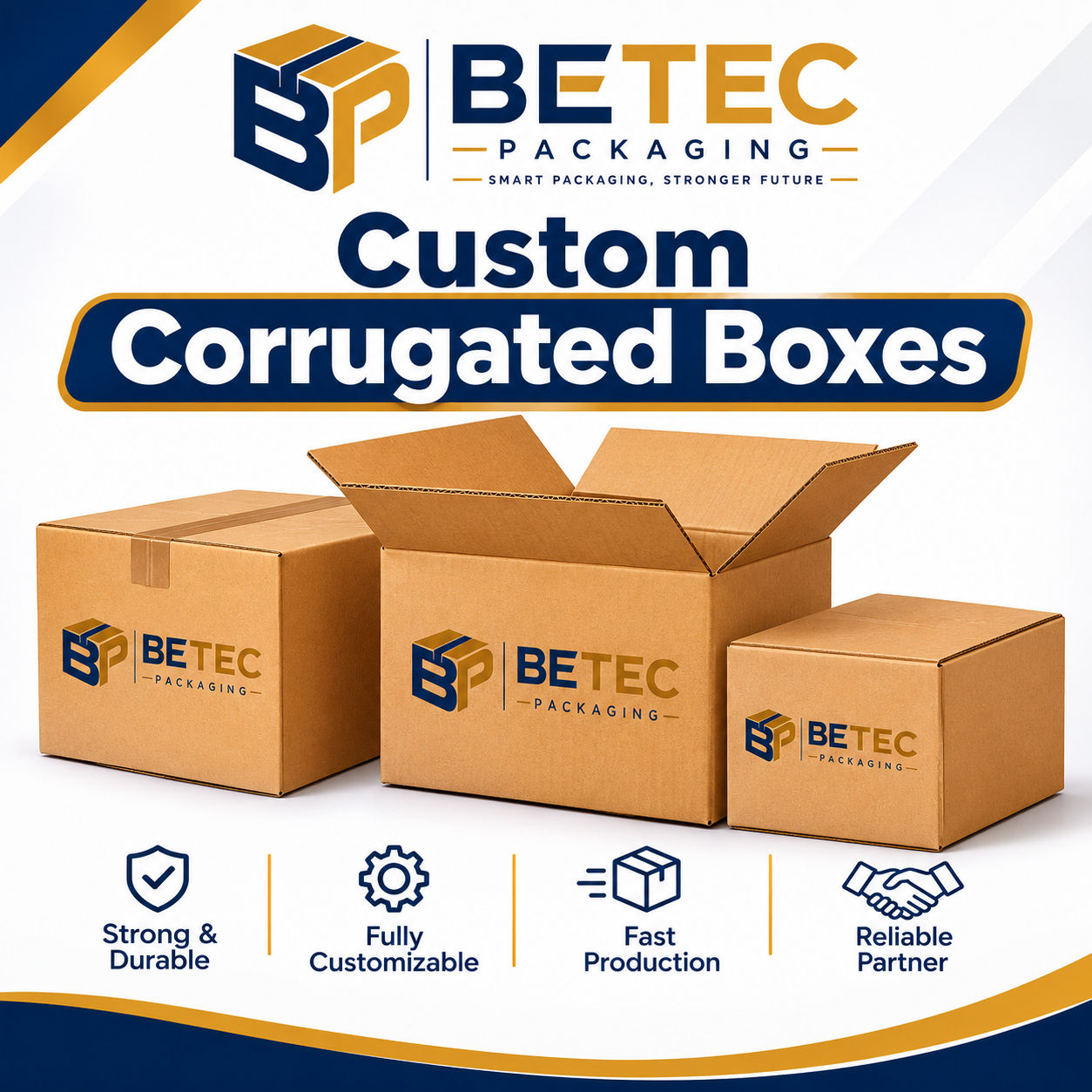
- Corrugated cardboard: Contains a fluted layer between paper liners, providing additional strength for shipping and transportation.
- Solid paperboard: Offers a smooth surface for high-quality printing and retail packaging.
- Rigid paperboard: Provides a sturdy structure commonly used for premium gift boxes, presentation packaging and luxury products.
Ask suppliers about paper thickness, board grade, material composition and weight capacity. If your products are fragile or heavy, request recommendations based on actual product dimensions and shipping conditions.
You should also request physical samples before approving a large production order. Examine the box structure, folding quality, edges, printing, adhesive and overall finish.
A reliable supplier should be willing to explain the differences between available materials instead of recommending the most expensive option automatically.
4. Look for Customisation and Printing Capabilities
Custom packaging helps businesses create a consistent brand identity. Your packaging is often one of the first physical interactions customers have with your brand, particularly when they order products online.
Therefore, choose paper packaging boxes suppliers that can support your branding and design requirements.
Look for suppliers offering:
Custom sizes and shapes: Your boxes should fit your products properly and avoid unnecessary empty space.
Logo printing: Your company logo should appear clearly and consistently across your packaging.
Colour printing: Choose printing options that reproduce your brand colours accurately.
Finishing options: Depending on your requirements, you may consider matte or gloss finishes, embossing, debossing, foil stamping and spot UV.
Custom inserts: Paperboard inserts, dividers and product holders can help keep items secure during transportation.
Special closures: Magnetic closures, tuck-end designs, sleeves and other closing styles can improve functionality and presentation.
Before confirming an order, ask for a digital proof or physical prototype. Check spelling, artwork placement, dimensions and colours carefully.
Remember that additional printing and finishing options can increase production costs. Select features that improve your product presentation rather than adding unnecessary expenses.
5. Evaluate the Supplier’s Eco-Friendly Packaging Options
Sustainability is becoming an important consideration for businesses that want to reduce packaging waste and make more responsible purchasing decisions.
However, choosing paper packaging does not automatically mean that every product is environmentally responsible. Material sourcing, manufacturing processes, coatings, adhesives and end-of-life disposal all matter.
When evaluating eco-friendly packaging options, consider the following factors.
Recycled content
Ask whether the supplier offers boxes made with recycled paper or paperboard. Find out what percentage of the material comes from recycled sources and whether it includes post-consumer recycled content.
Responsibly sourced paper
Look for suppliers that can provide evidence of responsible material sourcing. FSC certification, for example, provides a recognised chain-of-custody framework for eligible forest-based materials. You can verify certification through the official FSC certificate database.
Recyclable packaging designs
Simple paper-based packaging can be easier to recycle than products made from several permanently combined materials. Ask whether the packaging includes plastic lamination, metallic layers or other components that could affect recycling.
Environmentally considerate printing
Discuss water-based inks and other suitable printing options with your supplier. Also ask whether coatings and adhesives affect the recyclability of the finished box.
Material efficiency
Choose box dimensions that fit your products without excessive packaging. Reducing unnecessary material can help lower waste and improve transportation efficiency.
The UNHCR sustainable packaging guidelines also recommend assessing material use, packaging size, recycled content and end-of-life options when sourcing packaging.
Do not rely only on general marketing statements such as green, natural or biodegradable. Ask suppliers for specific evidence supporting their environmental claims. The UK government’s Green Claims Code provides useful guidance on making clear and substantiated environmental statements.
6. Compare Prices Without Compromising Quality
Price is an important consideration when selecting a packaging supplier, particularly if your business requires hundreds or thousands of boxes every month.
However, the cheapest quotation is not always the most economical option.
Low-quality packaging can result in damaged products, customer complaints, replacement costs and unnecessary business expenses.
Request quotations from at least three suppliers and compare their offers using the same specifications.
Your comparison should include:
- Cost per box.
- Material type and thickness.
- Custom printing charges.
- Die-cutting and setup costs.
- Minimum order quantity.
- Shipping and delivery charges.
- Sample and prototype costs.
- Additional finishing expenses.
Also ask whether the supplier offers bulk pricing. Larger orders may reduce the cost per unit, but avoid purchasing more boxes than your business can reasonably store or use.
Another important consideration is hidden pricing. Some suppliers advertise attractive starting prices but add separate charges for artwork preparation, printing plates, custom dimensions or packaging inserts.
Request a complete quotation before making your decision.
A dependable supplier should explain the pricing structure clearly and help you find a suitable balance between quality, functionality and budget.
7. Check Minimum Order Quantities and Production Capacity
Minimum order quantity (MOQ) is another important factor when comparing paper packaging boxes suppliers.
Some manufacturers specialise in large-scale production and require substantial orders. Others may accommodate smaller quantities, making them more suitable for startups and growing businesses.
Before selecting a supplier, ask:
- What is your minimum order quantity for custom boxes?
- Can I order different sizes in one production run?
- Do you offer small-batch production?
- Can you handle repeat orders?
- How many boxes can you manufacture per month?
- Can you increase production if my business grows?
Your supplier should have enough production capacity to support both your current requirements and future demand.
For example, a small online store may initially need 500 custom mailer boxes. As sales increase, the business may require 5,000 boxes or more.
Working with a supplier that can accommodate growing orders helps maintain packaging consistency and reduces the need to find a new manufacturing partner.
8. Request Samples Before Placing a Large Order
Never depend entirely on product photographs or digital mock-ups when evaluating a new packaging supplier.
Images may not accurately represent the actual material thickness, printing quality, structural strength or finishing.
Request samples to inspect the finished product before approving bulk production.
During your sample evaluation, check:
- Whether the box dimensions match your specifications.
- Whether the material feels strong enough for your product.
- Whether the printing is clear and correctly positioned.
- Whether the box folds and closes properly.
- Whether the edges and corners are professionally finished.
- Whether the packaging protects the product during handling.
- Whether the overall appearance matches your brand expectations.
If possible, place your actual product inside the sample box. This helps you evaluate the fit and determine whether additional inserts or protective features are necessary.
For shipping packaging, consider conducting practical handling tests under conditions that reflect your distribution process.
A supplier that provides samples and responds positively to feedback demonstrates a more transparent approach to business.
9. Read Customer Reviews and Check Supplier Reputation
A packaging supplier may have an attractive website and competitive prices, but you should still investigate its reputation before placing an order.
Customer feedback can provide useful information about product quality, delivery reliability, communication and after-sales support.
Start by checking reviews on independent platforms, business directories and relevant industry websites.
Pay attention to repeated comments about:
- Inconsistent box quality.
- Incorrect dimensions or printing.
- Delayed deliveries.
- Poor communication.
- Unexpected charges.
- Difficulties with replacement orders.
- Damaged packaging during transportation.
Do not make your decision based on one negative review. Look for recurring patterns and consider how the supplier responds when customers raise concerns.
You can also ask the company for examples of previous packaging projects or references from business customers.
A professional supplier should be able to explain its experience, manufacturing process and quality-control procedures.
10. Evaluate Communication and Customer Support
Good communication is essential when ordering custom packaging because even small mistakes can affect the finished product.
You may need to discuss dimensions, artwork, material specifications, printing methods, delivery dates and production changes.
Reliable paper packaging boxes suppliers should respond clearly and provide accurate information throughout the ordering process.
Evaluate the following areas:
Response time: Does the supplier answer enquiries within a reasonable period?
Technical knowledge: Can the team explain different box styles, paper grades and printing options?
Design assistance: Can they help review artwork and recommend suitable packaging structures?
Order updates: Do they provide information about sample approval, production and shipping?
Problem resolution: How do they handle incorrect orders, manufacturing defects or delivery problems?
Customer service becomes particularly important when you need repeat orders or want to introduce new packaging designs.
Choose a supplier that treats your business as a long-term customer rather than focusing only on receiving an initial payment.
11. Confirm Delivery Times and Shipping Arrangements
Even high-quality packaging can create problems if it does not arrive when your business needs it.
Late packaging deliveries may interrupt product launches, delay customer orders and affect your daily operations. This is why delivery arrangements should be discussed before confirming an order.
Ask potential suppliers about their estimated production and shipping schedules.
Important questions include:
- How long does sample production take?
- What is the estimated manufacturing time?
- How long does shipping usually take?
- Do you provide domestic and international delivery?
- Can you provide shipment tracking?
- How do you handle damaged or missing shipments?
- Can you accommodate urgent repeat orders?
If you operate an online store, consider maintaining a reasonable packaging inventory to avoid running out of boxes during busy periods.
You should also discuss packaging methods for transporting the boxes themselves. Flat-packed boxes can save storage space and reduce shipping volume, depending on their design.
For international orders, confirm shipping responsibilities, customs requirements, import duties and delivery terms before making payment.
A dependable supplier should provide realistic delivery estimates rather than promising timelines it cannot consistently meet.
12. Understand Quality Control and Manufacturing Standards
Quality control is essential when ordering custom packaging in large quantities. Even a small difference in box dimensions, material thickness or printing colour can create problems when packaging products on a commercial scale.
Before selecting a supplier, ask about its quality-control process.
A professional manufacturer should have procedures for checking raw materials, production accuracy, printing consistency and finished packaging.
Consider asking these questions:
- Are raw materials inspected before production?
- How do you check box dimensions?
- Do you inspect printing quality?
- Are finished boxes checked for structural defects?
- What happens if an order does not match the approved sample?
- Do you have a replacement or quality-complaint policy?
You should also request written confirmation of the agreed specifications.
This documentation should include material type, box dimensions, printing details, quantity, finishing requirements and approved artwork.
Having clear specifications reduces misunderstandings and makes it easier to resolve production issues.
13. Choose a Supplier That Offers Long-Term Value
Finding a packaging supplier should not be treated as a one-time purchasing decision. A reliable business relationship can help you maintain consistent packaging quality, simplify repeat orders and improve your overall purchasing process.
Instead of switching suppliers whenever you find a slightly lower price, evaluate the long-term value of your packaging partner.
A suitable supplier should offer:
- Consistent product quality.
- Competitive and transparent pricing.
- Flexible customisation options.
- Reliable production capacity.
- Clear communication.
- Responsible material choices.
- Dependable delivery arrangements.
- Support for future packaging requirements.
Once you find a supplier that meets these expectations, consider developing a long-term purchasing arrangement.
You may be able to negotiate better pricing for regular orders, maintain consistent packaging specifications and plan production around your sales requirements.
A strong relationship also makes it easier to introduce new packaging styles when your product range expands.
14. Consider Betec Packaging for Custom Packaging Solutions
When researching packaging partners, businesses should consider companies that understand the importance of product protection, branding and custom packaging requirements.
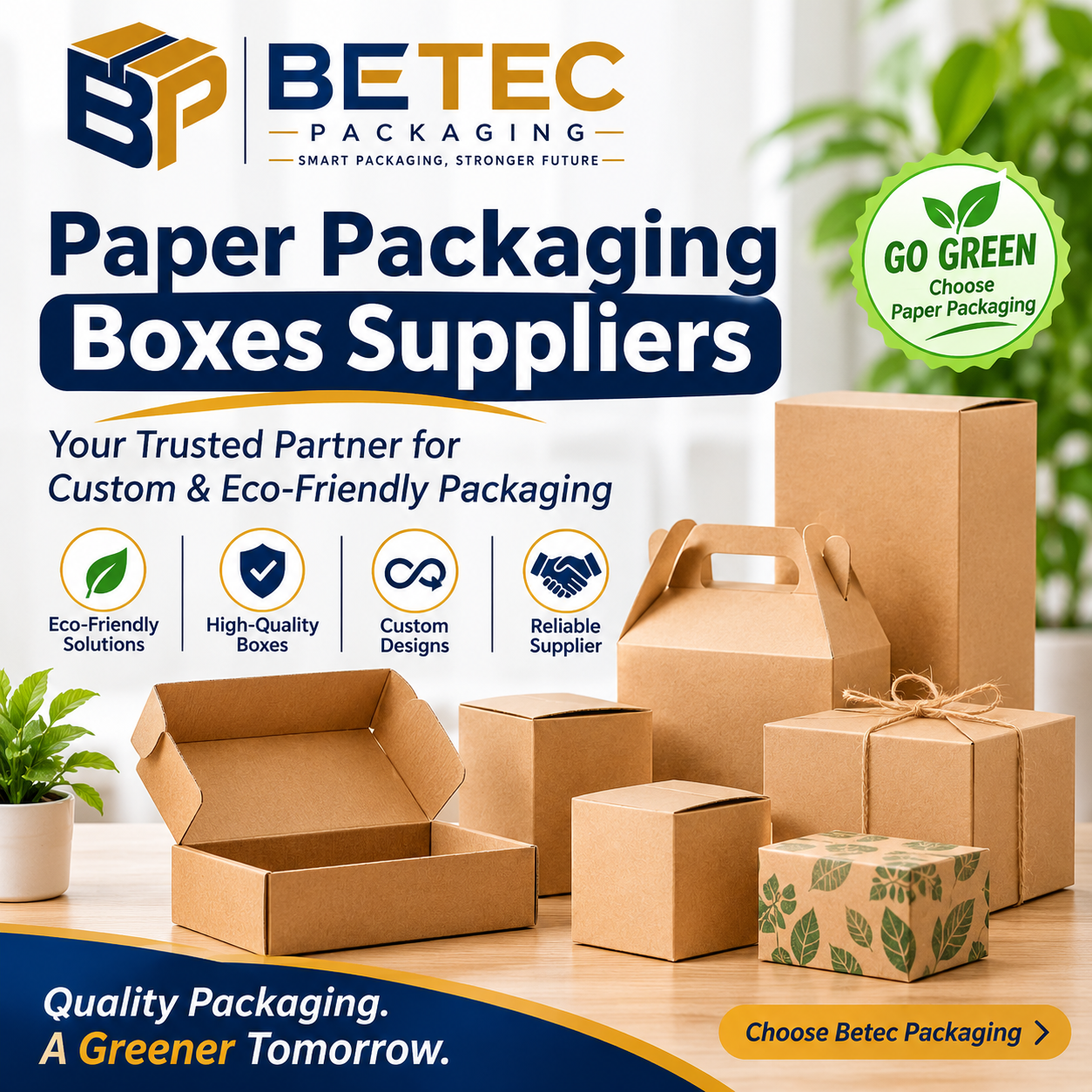
Betec Packaging is a brand to explore when researching packaging solutions for different business needs. Whether you are developing new retail packaging, improving your product presentation or looking for customised boxes, choosing suitable packaging styles and materials should remain a priority.
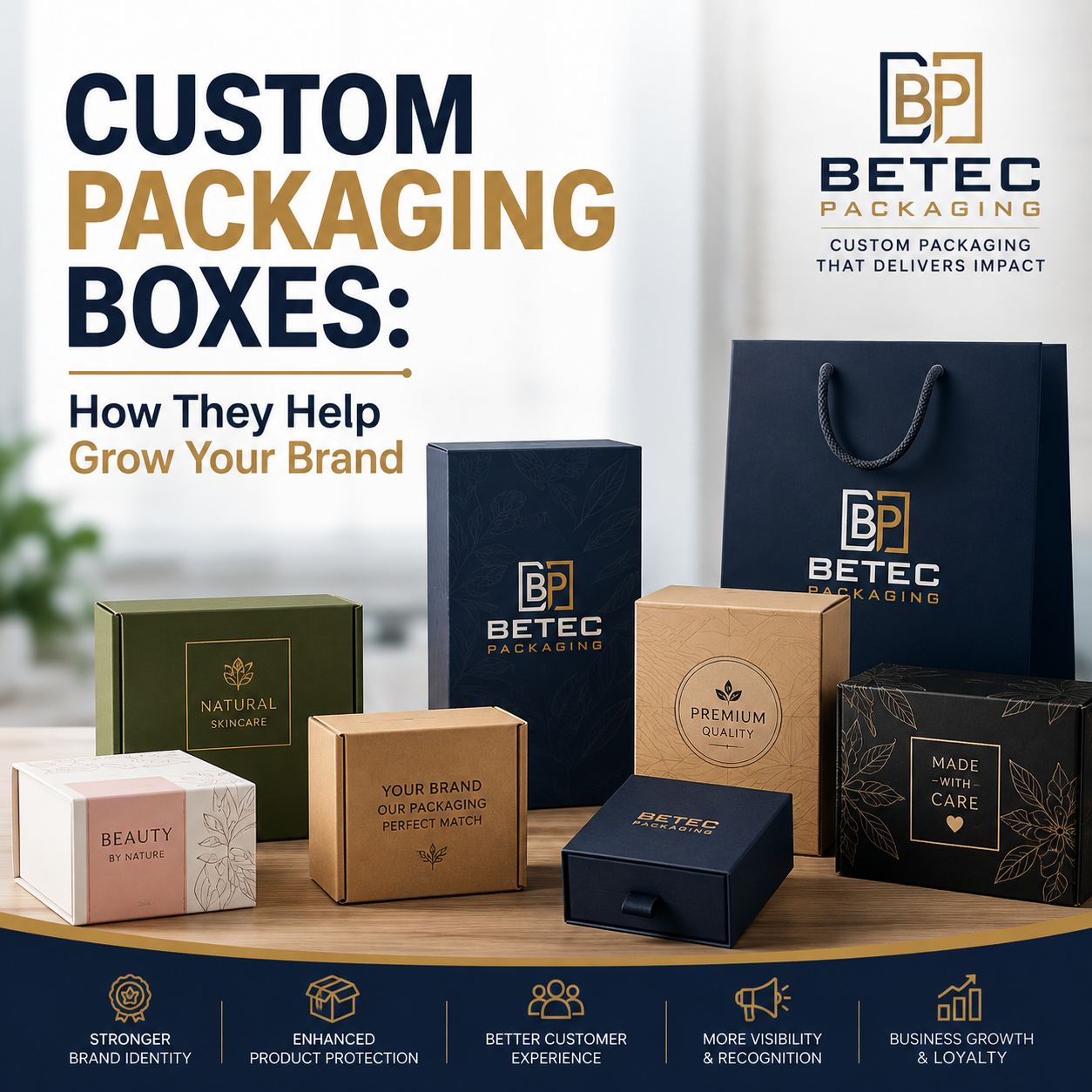
Businesses can explore packaging ideas such as:
- Custom kraft packaging boxes.
- Folding cartons for retail products.
- Custom mailer boxes for e-commerce.
- Boxes with lids for product presentation.
- Magnetic closure boxes for premium packaging.
- Custom hemp packaging boxes.
- Protective packaging for shipping and storage.
- Specially designed boxes for seasonal products.
The right packaging design depends on your product, target customers, budget and shipping requirements.
Before selecting any packaging option, consider its dimensions, material composition, printing requirements and suitability for your intended use.
If you are comparing paper packaging boxes suppliers, include Betec Packaging in your research and review its available packaging options to identify solutions that match your business requirements.
Visit Betec Packaging to explore packaging products and ideas for your business.
15. Common Mistakes to Avoid When Choosing Packaging Suppliers
Even experienced businesses can make mistakes when selecting packaging manufacturers. Avoiding these problems can save time, money and unnecessary production delays.
Choosing a supplier based only on price
A low quotation may look attractive, but poor-quality materials can increase replacement and shipping costs. Always compare specifications and sample quality.
Ignoring material specifications
Do not assume that every kraft box or cardboard box has the same strength. Check the material grade, thickness and construction.
Skipping sample approval
Ordering thousands of boxes without inspecting a sample increases the risk of receiving packaging that does not meet your expectations.
Overlooking sustainability evidence
Do not accept vague environmental claims without supporting information. Ask about recycled content, certification and recyclability.
Failing to check delivery arrangements
An inexpensive supplier may become costly if production or shipping delays interrupt your business operations.
Not confirming artwork
Always approve the final design before production. Check spelling, logos, colours, dimensions and printed information.
Ordering excessive quantities
Large orders may reduce the unit price, but unnecessary inventory ties up money and storage space. Estimate your actual packaging needs before purchasing.
Avoiding these mistakes will make your supplier selection process more efficient and help you establish a dependable packaging supply chain.
Conclusion
Finding reliable paper packaging boxes suppliers requires careful research, product testing and comparison. The right supplier should understand your packaging requirements, offer suitable materials, provide customisation options and maintain consistent quality.
You should also evaluate pricing, minimum order quantities, production capacity, delivery arrangements and customer support before making a final decision.
For businesses interested in eco-friendly packaging, recycled materials, responsibly sourced paper and recyclable designs are important considerations. However, always request evidence to support environmental claims instead of relying on general marketing statements.
Most importantly, choose a packaging partner that can support your business as it grows. A dependable supplier can help improve product presentation, protect items during transportation and maintain consistent branding across your packaging.
Whether you need kraft boxes, folding cartons, corrugated shipping boxes or premium custom packaging, taking the time to compare suppliers will help you make a more informed decision. Explore options such as Betec Packaging, assess the available solutions and select packaging that meets your quality, branding and environmental requirements.